
Dealing with Asphalt Driveway Cracks: Repair or Replace?
Cracked asphalt is more than just an eyesore – small fissures let water and debris penetrate the pavement, causing more damage with each freeze‑thaw cycle. Homeowners often ask whether these cracks are something they can handle themselves or whether it is time to call a professional. As Tex Pave Experts, we’ve spent more than 35 years fixing and building asphalt pavements across North Texas, so we know when a simple fix will do and when more extensive work is needed. Below, we answer common questions about asphalt driveway cracks and explain the steps you can take to protect your investment.
What causes cracks in an asphalt driveway?
Asphalt is a flexible material, but it still reacts to changes in load, temperature, and environment. Researchers from the Mineta Transportation Institute note that cracks can develop for multiple reasons, such as repeated traffic, weather changes, and aging. Expansion and contraction during hot and cold weather cause movements in the pavement; in cold weather, the pavement shrinks and cracks widen, allowing debris and water to enter, while in hot weather, the pavement expands, trapping debris inside and preventing the crack from closing. Over time, these cycles create rough bumps and accelerate deterioration.
Other factors that contribute to cracking include:
- Moisture infiltration and freeze‑thaw cycles. When water seeps into a crack and freezes, it expands and “heaves” the pavement. The University of Minnesota’s Center for Transportation Studies notes that freeze‑thaw cycles let water penetrate and expand in distressed asphalt pavement, leading to cracks and potholes.
- UV exposure and oxidation. Sunlight oxidises the asphalt binder, making the surface dry and brittle over time. Oxidised asphalt is more susceptible to cracking under heavy loads or temperature changes.
- Heavy loads or poor base preparation. Repeated heavy vehicles or an unstable base can cause fatigue cracking, often appearing as alligator‑shaped patterns. The Mineta Institute’s distress manual identifies common crack types such as fatigue, block, edge and transverse cracks – many of these originate from structural issues rather than just surface wear.
- Tree roots and drainage issues. Roots growing under the driveway or poor drainage along the edges can push the pavement upward or wash away sub‑base material, producing uneven settlement and cracks along the borders.
Understanding what is causing your cracks is the first step toward the right repair strategy. A professional inspection can determine whether the problem is mostly surface‑level or whether there are deeper structural issues.
If you are dealing with cracks in an asphalt driveway, what should you do?
Not all cracks are the same, and the right repair depends on their width, depth and extent. Here are practical steps homeowners can follow:
- Inspect and clean the cracks. Remove weeds, dirt and loose debris so you can see the true width and depth of the crack. Cracks that are narrow and not connected to potholes or widespread rutting are usually candidates for sealing or filling.
- Determine the crack type and width. Professional guidelines use the terms working and non‑working cracks. Working cracks open and close with temperature changes, while non‑working cracks show little movement. The Mineta Transportation Institute points out that crack sealing is generally used for working cracks wider than about 1/4‑inch, while filling is used for narrower, non‑working cracks. If you can insert a quarter‑inch (6 mm) object into the crack, sealing may be required; hairline cracks can often be filled with a simple crack filler or sealing product.
- Seal or fill small cracks promptly. Crack sealing prevents moisture from reaching the base and prolongs pavement life. The Seattle Department of Transportation states that crack sealing is a preventive maintenance activity that prevents infiltration of water and other materials and helps maintain streets in good condition. For do‑it‑yourself repairs, choose a quality asphalt crack filler or rubberised sealant, follow the manufacturer’s instructions and apply during moderate temperatures when the crack is open (spring or fall is ideal). Be sure to remove any vegetation and use a wire brush or blower to clean the crack so the sealant adheres.
- Resurface when damage covers a large area. If cracks are numerous, extend across more than about a quarter of the driveway surface, or if the asphalt is significantly oxidised, a thin asphalt overlay (resurfacing) may be more cost‑effective. Resurfacing entails scraping off the top layer and laying a new layer of asphalt over a sound base. Industry guidelines suggest resurfacing can extend an asphalt driveway’s life by 5-10 years, whereas patching alone may last only a couple of years.
- Replace when cracks are severe or structural. Deep cracks wider than 1/4 inch, alligator cracking, large potholes, heaving from freeze‑thaw cycles or a sunken base indicate structural failure. In such cases, sealing or resurfacing will only provide short‑term relief. Replacing the driveway involves removing the old pavement, repairing or replacing the base and installing new asphalt. Although this is more expensive up front, it is often more economical over the long term, especially when the existing pavement is older than 15-20 years or has significant sub‑base damage.
- Prevent future cracks. Preventive maintenance is key. Regularly clean your driveway, apply a high‑quality seal coat every few years and ensure good drainage so water does not pool along the edges. The U.S. Forest Service explains that asphalt seal coat treatments are a preventive maintenance procedure designed to seal and protect the pavement from sunlight, rain and snow and to limit water infiltration. Seal coats won’t fix base failures, but they extend pavement life when the distress is limited to surface deterioration.
Addressing cracks promptly keeps repair costs down and prolongs the life of your asphalt driveway. If you’re unsure of the best approach or if the damage is extensive, it’s wise to consult an experienced asphalt contractor.
Why To Choose Tex Pave Experts?
When you need professional help, selecting the right contractor makes all the difference. Here’s why homeowners across North Texas have trusted Tex Pave Experts for over three decades:
Comprehensive asphalt & paving solutions. We handle everything from minor crack repairs and seal coats to complete driveway replacements and commercial parking lots. Our team will evaluate your driveway’s condition and recommend the most appropriate repair, whether it’s a quick seal job or a full reconstruction.
Local expertise across North Texas. Being based in Texas means we understand the region’s clay soils, heavy rainfall and intense heat. We design and install pavements that withstand North Texas’ unique climate and soil conditions.
Versatility in project scope. Whether you own a residential driveway or manage large commercial lots, we’ve got the expertise and equipment to tackle jobs of any size. From precise patching and crack sealing to large‑scale asphalt paving, we tailor our solutions to your needs.
Commitment to quality & longevity. We use high‑grade materials, follow industry best practices and never cut corners. Our goal is to deliver pavement that looks great and lasts for many years, so you get the best return on your investment.
Customer‑centric approach. We know that driveway repairs can be disruptive. Our team works with you to schedule projects at convenient times, provides clear communication, and ensures that the work area is clean and safe. If you’re searching for the Best Asphalt Contractor Near Me, look no further than Tex Pave Experts through their contact 9725697946 or fill out a form for request a quote for custom needs.
Frequently Asked Questions
Yes. Even narrow cracks allow moisture to penetrate the pavement. Filling hairline cracks with a quality asphalt crack filler prevents water infiltration and stops minor cracks from becoming potholes. According to the Mineta Transportation Institute, sealing or filling cracks reduces moisture intrusion and helps preserve the underlying pavement.
Most driveways benefit from a seal coat every two to three years, but frequency depends on traffic, climate, and the condition of the pavement. The U.S. Forest Service notes that seal coats are a preventive maintenance procedure designed to protect the asphalt surface and limit water infiltration. If your driveway looks faded or the surface feels dry and rough, it’s time to reseal.
If cracks are wider than about 1/4 inch, form an interconnected “alligator” pattern or are accompanied by potholes and base failure, replacement may be the best option. The Mineta Transportation Institute notes that crack sealing is typically triggered when crack width exceeds about 1/4 inch, and that severe cracking often indicates structural issues. A professional evaluation can determine whether resurfacing or full replacement is more cost‑effective.
For small cracks and localized damage, DIY repair is possible. You’ll need to clean the crack thoroughly and use a suitable crack filler or sealer. However, resurfacing and replacement require specialised equipment and expertise. For larger cracks or widespread damage, hiring a professional ensures a durable, long‑lasting result and often saves money in the long run.
How to Keep Your Concrete Pavement in Top Condition: Maintenance Tips
Concrete pavement is a hard surface made with a special mix called portland-cement concrete (PCC). It is often used for roads, driveways, and patios. Unlike asphalt, which can bend a little under weight, concrete is very stiff. This stiffness helps it spread out the weight of cars and trucks so the ground below doesn’t get damaged. Because of this, concrete pavements can last for many years if they are taken care of properly.
A pavement system usually has three main parts:
- Surface course (PCC slab): This is the top layer that carries the traffic. It makes the road smooth, safe to drive on, and also keeps water from soaking into the lower layers.
- Base course: This layer of crushed stone or other material sits under the slab. It helps spread out the loads even more and lets water drain away.
- Subbase or subgrade: This is the natural ground or extra support layer under everything. It helps stop frost damage and keeps fine soil from mixing into the base.
If the concrete slab cracks, breaks, or lets water in, it can lose its strength and stop working well. That’s why regular care, like cleaning, sealing the joints, and fixing small problems early, is important to keep the pavement strong and lasting longer.
What are the Ways to Maintain Concrete Pavement?
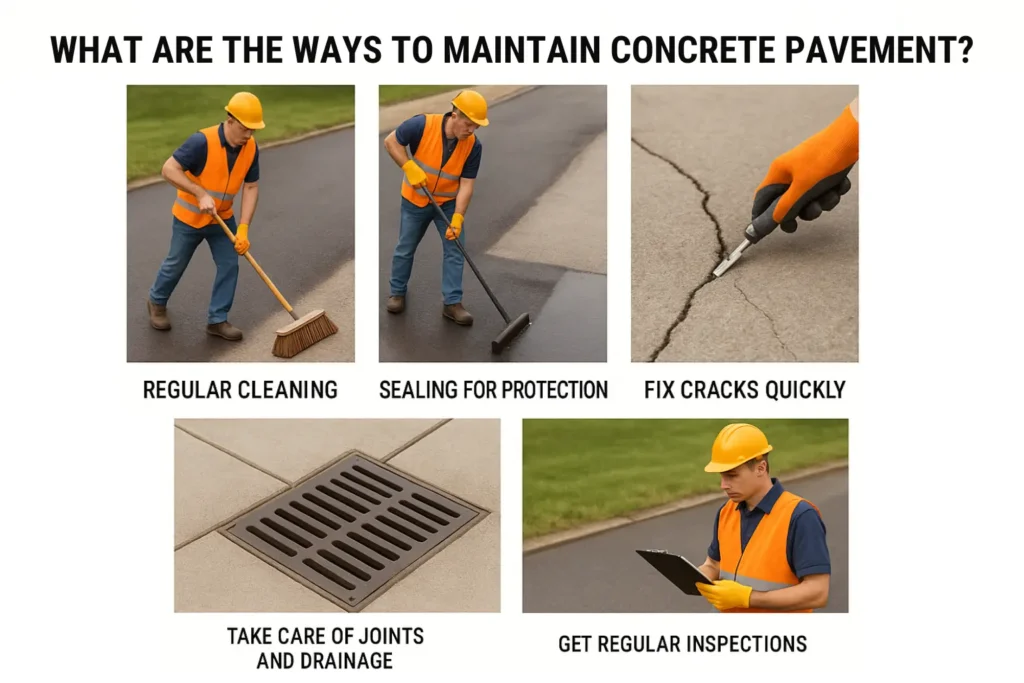
Concrete may look super strong, but it can still crack or wear down if you don’t take care of it. Since concrete has tiny pores, water, dirt, and chemicals can get inside and cause damage over time. Regular maintenance keeps your pavement safe, looking nice, and lasting longer. Here are some simple tips:
- Regular Cleaning – Dirt, dust, and pollution build up on concrete and can slowly damage the surface. Cleaning with a broom, soft brush, or even a pressure washer helps keep it clear and prevents stains. Don’t use harsh chemicals or salt for melting ice, they can make concrete break down faster.
Why? Small particles and chemicals can seep inside the concrete. When water freezes and thaws, it expands, making cracks worse. Keeping it clean also makes it safer to walk on and look better. - Sealing for Protection – Since concrete is porous, water, oils, and chemicals can soak in and cause stains or cracking. Putting on a good sealer adds a protective layer that keeps liquids out. It also makes cleaning easier later.
Why? Sealing the surface and joints stops water and harmful materials from getting inside. This protects the base layers under the concrete and helps prevent serious problems like spalling (chunks breaking off). - Fix Cracks Quickly – It’s normal for concrete to crack as it ages. Some cracks grow, while others stay the same, but both let water in and cause more damage. Small cracks can be filled with repair products, while bigger ones might need a professional.
Why? If water gets into cracks, it can damage the ground or metal supports underneath, leading to even bigger cracks. Fixing them early stops this cycle. - Take Care of Joints and Drainage – Concrete has joints to control where cracks form and to handle temperature changes. If joints aren’t sealed, water and debris can get in and cause damage. Also, make sure water drains properly. Puddles can cause erosion, white stains, or freeze-thaw damage.
Why? Good drainage and sealed joints keep water away from the slab and base, reducing stress and preventing cracks. - Get Regular Inspections – Check your pavement now and then for cracks, surface problems, or drainage issues. Professionals can spot small issues before they turn into big, expensive repairs. Preventive maintenance works best when the pavement is still in good condition.
Why? Fixing little problems early saves money, keeps the pavement stronger for longer, and avoids major disruptions.
What Happens if We Don’t Take Care of It?
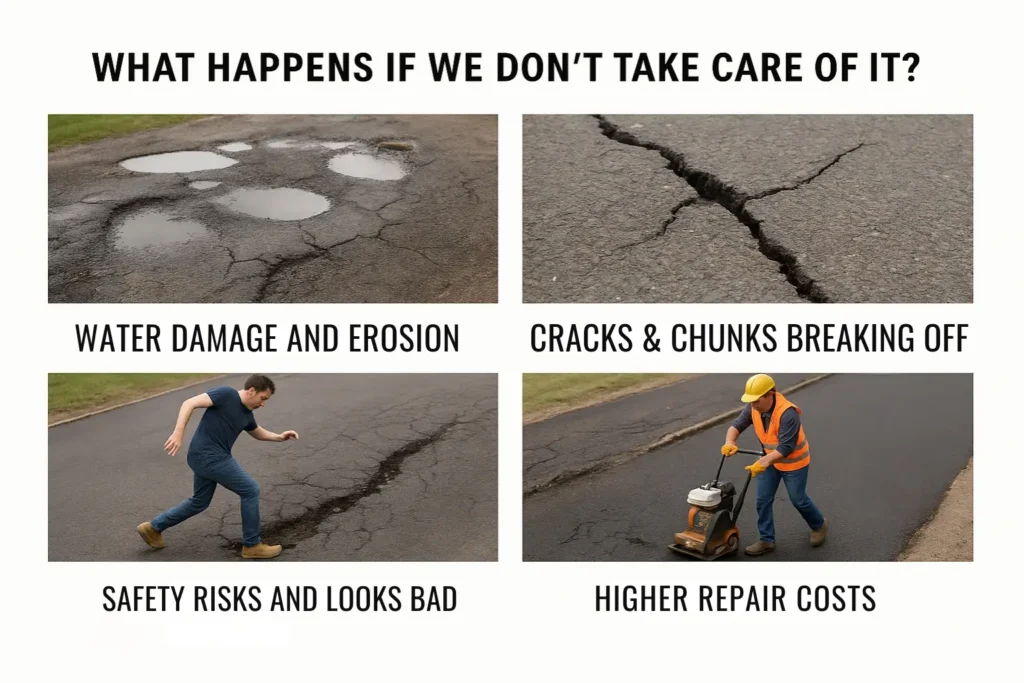
If concrete pavement isn’t maintained, it can lead to big problems:
- Water damage and erosion: Cracks and open joints let water seep inside. Over time, this water can wash away the support under the pavement, causing the slab to crack, break apart, or even pop up.
- Cracks and chunks breaking off: Cracks give water an easy path inside. When that water freezes and thaws, it makes cracks worse and can cause big pieces of concrete to break away. If the concrete has steel inside, it can start to rust, which makes the damage worse.
- Safety risks and bad looks: Broken or uneven pavement is a trip hazard and makes your property look poorly cared for. Well‑maintained pavement is safer and keeps your property looking good and valuable.
- Higher repair costs: If small problems are ignored, they turn into big, expensive ones. Regular upkeep is cheaper and helps pavement last much longer before needing major repairs or replacement.
Why Choose Tex Pave Experts?
As a family‑owned business with over 35 years in the paving industry, Tex Pave Experts offers more than just basic repairs, we bring proven expertise to every project. Here’s what sets us apart:
- Decades of proven experience: With three decades in the field, we’ve handled everything from small residential driveways to large commercial parking lots. Our long track record means we know how to diagnose and solve pavement issues effectively.
- Comprehensive range of services: We provide a full suite of paving solutions, hot‑mix and recycled asphalt, asphalt driveways and parking lots, resurfacing, sealcoating, crack repair, and complete concrete installations (driveways, sidewalks, patios). We also offer road‑base services like flex base and crushed concrete, so you can address all your paving needs with one trusted contractor.
- Modern equipment and high‑quality materials: We use state‑of‑the‑art equipment and top‑grade materials to ensure a smooth finish and long‑lasting results. Investing in the right equipment allows us to prepare subbases properly and apply uniform sealers, which reduces the likelihood of premature cracking or settlement.
- Transparent, customer‑oriented process: Planning a paving project can feel overwhelming. That’s why we offer free estimates and clearly explain our workflow, from site preparation and grading to installation and cleanup. This transparency builds trust and helps you make informed decisions.
- Commitment to quality and client satisfaction: Our dedication to excellence is reflected in glowing customer reviews. We stand behind our work and won’t consider a job complete until you’re satisfied. If you’re searching for a Concrete Pavement Contractor Near me, look no further than Tex Pave Experts. We’re local, experienced and ready to help you protect your investment.
Frequently Asked Questions
1. How often should I seal my concrete pavement?
It depends on how much the pavement is used and the weather. Most homeowners reseal their driveways every 2-5 years to keep the surface protected. Pavements with heavy traffic may need sealing more often. A good way to check is to see if water still beads on top, if it doesn’t, it’s time to reseal.
2. What is the best way to clean concrete surfaces?
Use a mild cleaner and a soft brush or pressure washer to get rid of dirt and dust. Stay away from harsh chemicals and salt-based ice melts since they can damage the concrete. For oil stains, use a concrete-safe cleaner and rinse the area well.
3. Does concrete crack if it’s not maintained?
Yes. Concrete naturally expands and shrinks when the temperature and moisture change. Small cracks often appear, and if you don’t fix them, water can get in and make the cracks bigger. This can lead to pieces breaking off or surface damage.
4. What happens if I ignore joints and drainage?
If joints aren’t sealed or get clogged, water and dirt can get inside the pavement. This weakens the support and can cause cracks, broken edges, or even slabs lifting up. Bad drainage can also leave puddles, white stains, and freeze-thaw damage. Sealing joints and making sure water drains properly helps stop these issues.
5. Do I need professional help or can I maintain concrete myself?
You can usually handle simple tasks like cleaning, sealing, and fixing small cracks on your own. But professionals can find hidden problems and make stronger repairs. For big cracks, major damage, or commercial pavements, it’s best to call an expert.
What are the Signs of a Bad Asphalt Job?
When you hire someone to pave your driveway or parking lot, you want it to last a long time, look smooth, and hold up against cars, trucks, and Texas’s tough weather. But if the work is done poorly, small signs like tiny cracks or puddles of water can turn into big problems such as potholes, tripping dangers, and costly repairs. This guide explains what a good asphalt job should include, how to spot poor work, and what steps to take if you think your pavement wasn’t done right. It also shows why picking an experienced local company like Tex Pave Experts is the smartest way to avoid stress and wasted money.
What Is an Asphalt Job?
Paving with asphalt is more than just spreading blacktop on the ground. First, workers check the soil and build a strong base. The base has to be packed tightly so the road can handle cars and trucks without shifting. Experts say the tiny air spaces in the asphalt should be between 3% and 7%. If there are too many (above 8%), water and air can seep in and make the pavement wear out faster. If there are too few (less than 3%), the pavement can become weak and unstable.
The surface also has to be shaped so rainwater runs off instead of sitting in puddles. The Asphalt Institute recommends a slight slope of about 1.5% to 3% so water drains properly and doesn’t cause problems like hydroplaning. Once the surface is ready, the asphalt has to be laid at the right temperature, pressed down with rollers, and smoothed out where it meets curbs and drains.
A good asphalt job uses the right materials, temperatures, base prep, and finishing touches. If any of these steps are skipped or done carelessly, cracks, dips, and broken pavement will appear later.
What are the signs to detect a bad asphalt job?
- Cracks soon after paving Small “alligator” cracks or long lines in a new driveway are not normal. They usually happen when the ground isn’t packed well, the asphalt mix is wrong, or the job wasn’t done correctly. Cracks let water get in. When that water freezes and expands, it makes the cracks worse and weakens the base underneath. Experts warn that paving over wet spots traps moisture. When the mix heats up, that water can turn to steam and cause the asphalt layers to separate. Cracks that appear early are a big warning sign. A good contractor will never pave over puddles and will seal small cracks quickly to keep water out.
- Dips and potholes If you see low spots or dips that hold water, it often means the ground under the pavement wasn’t packed tightly or the gravel base was too thin. These weak spots can later turn into potholes when cars drive over them. A solid base should stop the ground from settling, and the top surface should have a gentle slope of at least 1.5% so water runs off. If your new driveway has puddles or potholes within months, the base prep was likely skipped. The only real fix is to cut out the bad spot, rebuild the base, and repave.
- Standing water Water pooling on asphalt is never just a cosmetic issue, it makes the pavement wear out faster. Experts explain that standing water seeps in, causes hydroplaning, and leads to water damage. New asphalt should always have a slight slope or crown so rain runs to the sides. If water is still sitting there hours after a storm, ask your contractor why. Sometimes the fix is small, like adding a drain, but other times the slope has to be corrected by grinding down and repaving.
- Raveling (loose gravel on the surface) Raveling is when the top layer of the asphalt starts breaking apart and tiny rocks come loose. This happens if the asphalt wasn’t packed tightly, wasn’t hot enough, or if a poor-quality mix was used. As the binder wears out, the surface becomes rough and stones fall away. Sealing the driveway can help slow this, but bad cases need a new layer with the right mix. Raveling also makes oxidation worse, because more pavement is exposed to air and sunlight.
- Colour fading and brittleness New asphalt is dark black and a little flexible. Over time, sun and air make it harder and turn it grey. Some change is normal, but if the colour fades quickly or the surface becomes brittle within months, it means the mix wasn’t protected. Without sealcoating, asphalt loses its flexibility faster and cracks more easily. Experts recommend sealcoating as soon as the pavement starts to look dry and brittle. This seals tiny spaces on the surface and helps stop raveling.
- Rough edges and bad joins A quality asphalt job should blend smoothly into sidewalks, curbs, or other driveways. If the edge ends suddenly, leaves a bump, or creates a lip where it meets other surfaces, it shows poor workmanship. Bad edges not only look sloppy but also let water sneak under the pavement and cause damage. A skilled contractor will slope and pack the edges so the surface looks smooth and safe.
What happens if a bad asphalt job happens?
If asphalt is not built the right way, small issues can quickly grow into big problems:
- Water damage – Cracks and weak spots let water get inside. When the weather changes, the water freezes and melts, which makes the cracks spread and the pavement break apart. If the asphalt mix has too many tiny air holes (over 8%), water can leak through faster and cause damage sooner.
- Safety risks – Low spots that collect water can make cars slide. Potholes can trip people or harm vehicles. Uneven edges near sidewalks can cause accidents or break safety rules. These problems may also lead to injury complaints or insurance issues.
- Shorter lifespan – Good asphalt should last 15-20 years with care. Poorly made asphalt may need big repairs or full replacement after only a few years. Fixing or replacing bad pavement is much more expensive than doing it right the first time.
- Extra repair costs – Constant patching and sealing costs add up. Choosing the cheapest contractor may seem like a bargain, but if they cut corners, you’ll pay more in the long run.
- Lower property value – A cracked driveway or damaged parking lot looks unattractive. It gives visitors or buyers a bad impression and can even lower your property’s value.
If you think your driveway or parking lot was built poorly, contact a trusted paving expert. They can check the pavement’s strength, thickness, and base, then suggest the best way to fix it.
Why To Choose Tex Pave Experts?
If you own a home or business in North Texas, you deserve an asphalt contractor who does the job right and stands behind their work. Here’s why Tex Pave Experts is the best choice when you search for the Best Asphalt Contractor Near Me:
- Complete asphalt and paving services – We take care of everything, from building new driveways to resurfacing and repairs. We check the soil, design a strong base, use high‑quality asphalt, and make sure the pavement is packed tightly so it lasts for many years.
- Local knowledge of North Texas – With over 35 years of experience, we know the local soil, weather, and traffic needs in Dallas-Fort Worth and nearby towns. Our team builds pavement that can handle heavy rain and hot Texas summers.
- Projects of all sizes – No matter if it’s a small home driveway, a country road, or a huge parking lot, we have the crew and equipment to get it done. We make sure every job has the right slope, drainage, and smooth finish.
- Focus on quality and durability – We never cut corners. Our crews follow best practices like avoiding paving over puddles, keeping air spaces at the right level, and making sure the slope is correct. By using the right methods and materials, we build pavement that stays strong and looks good for decades.
- Clear and honest communication – At Tex Pave Experts, we listen to your goals, explain your choices, and give you detailed proposals. We treat your property with care, because your satisfaction is what matters most.
Frequently Asked Questions
How long should a properly installed asphalt driveway last?
If it’s built well, with a solid base and regular care, an asphalt driveway can last 15-20 years or more. How long it lasts depends on the weather, how many cars and trucks use it, and if the surface is sealed now and then. Good work at the start is very important, bad compaction or poor drainage will make the driveway fail much sooner.
Can I fix a bad asphalt job without tearing it out?
Some problems can be fixed. Small cracks can be sealed to stop water from getting in. Low spots or potholes can be cut out and patched with fresh asphalt. But if the pavement is breaking down in many places or the base wasn’t built right, the only long-term fix is to tear out and replace that part.
When should I sealcoat my new driveway?
Experts say you usually don’t need to seal a new driveway for 2-5 years, especially if it doesn’t have heavy traffic. If you seal too soon, it can actually harm the surface. The right time to seal is when the driveway starts looking dry, faded, or shows small cracks. A thin coat of sealer helps protect it and keep it strong.
Why is water such a problem for asphalt?
Asphalt bends and flexes, but water weakens it. Puddles let water soak in, which softens the base and causes sinking. In cold areas, freezing and thawing makes cracks worse. Even in warm places like North Texas, standing water makes the surface crumble and fade. That’s why it’s important to build asphalt with the right slope so water runs off and to never pave over wet areas.
How can I choose a trustworthy paving contractor?
Pick someone with many years of local experience, proper licenses and insurance, and a list of recent jobs. Ask how they prepare the base, what equipment they use to pack the asphalt, and how they handle drainage and edges. Good contractors explain their process, give a clear written proposal, and often include a warranty. Reading reviews and getting a few quotes helps you find fair pricing without losing quality.
Asphalt Resurfacing vs. Replacement: Which is the Best Solution for Your Pavement?
Your driveway or parking lot won’t last forever. Rain, sunlight, oil leaks, and heavy cars all wear down asphalt over time. Small cracks can spread into bigger ones, potholes can show up, and the smooth surface can start to bend and break. When this happens, homeowners and businesses usually have two choices: fix the top layer by resurfacing it, or tear it out and replace it completely. This guide will explain what each option means, when it’s the right time to use it, and how to pick the best choice for your property. We’ll keep the language clear and give you solid facts so you can decide with confidence.
What Is Asphalt Resurfacing?
Resurfacing, also called an overlay, means taking off the top layer of asphalt and putting on a new one. Workers grind away the old surface, fix small problems, and lay down about 1½ to 2 inches of fresh hot asphalt on top of the base. Since the base stays in place, resurfacing is faster and less messy than replacing the whole driveway. Most driveways can be resurfaced in just one day and used again soon after.
When Does Resurfacing Work?
Resurfacing isn’t the answer for every driveway or parking lot. It works best on surfaces that are less than 15-20 years old, have a strong base, and only have light damage. Experts usually suggest resurfacing when:
- Only about one-quarter or less of the surface needs fixing.
- Cracks are small, about ¼ inch wide or less, and not very deep.
- The pavement is mostly flat, with no big dips, bumps, or drainage problems.
- The base underneath is solid with no signs of major failure.
If these conditions are met, resurfacing can add 8-15 more years of life to your asphalt. It also makes it look new again. Once the new layer is put down and pressed smooth, you’ll have a dark, even surface that improves curb appeal.
Costs and Benefits of Resurfacing
One of the biggest benefits of resurfacing is the cost. According to HomeGuide, it usually costs $1 to $3 per square foot. For a normal driveway, that’s around $400 to $1,800 depending on its size and where you live. Since the base layer stays in place, resurfacing takes less work and fewer materials. It can also be more eco-friendly because some workers use special heaters to mix the old asphalt with the new, which cuts down on waste.
But resurfacing only fixes the top layer. It won’t repair a weak or broken base, so if the bottom layers are already damaged, the same problems will come back. Resurfacing also doesn’t last as long as a full replacement. You may need to resurface again or rebuild the whole driveway within about 10 years.
What Is Asphalt Replacement (Repaving)
Replacement, also called repaving, means rebuilding the pavement from the ground up. Workers remove the old asphalt, shape the soil so water drains correctly, build a new base layer, add a sticky coating, and then lay down a fresh layer of hot asphalt. This process repairs both surface problems and deeper issues in the foundation.
When Do You Need Replacement?
Repaving is usually needed when:
Cracks are very deep or wide (over half an inch) or there are big potholes that show the base is weak.
More than a quarter of the surface is damaged.
The asphalt is over 20-30 years old.
The pavement is uneven or buckling, which means the base underneath is failing.
The driveway or lot has had many repairs that didn’t last.
If these problems are present, resurfacing would only cover them up for a short time. Full replacement solves the root problem by rebuilding the base. With proper care, a new surface can stay strong and smooth for 20-30 years.
Costs and Benefits of Replacement
Repaving costs more because it needs extra work, heavy machines, and more materials. Prices usually range from $4 to $10 per square foot, and in some places it can be as high as $15 per square foot. For most driveways, this means spending several thousand dollars. Repaving also takes more time since workers have to dig up the old pavement, prepare the base, lay the new asphalt, and let it cure.
Even though it costs more, replacement has big long-term benefits. By fixing problems in the base, you avoid constant repairs. A brand-new asphalt surface is stronger and can handle heavy cars and tough weather much better than a weak base with patchwork fixes. For homeowners who plan to stay in their home for many years, or businesses with lots of traffic, repaving is often the smarter and more cost-effective choice over time.
Resurfacing vs. Replacement: A Side‑by‑Side Comparison
| Factor | Resurfacing | Replacement |
| Cost | $1-$3 per sq. ft. | $4-$10 per sq. ft. or more |
| Longevity | Adds 8-15 years | Lasts 20-30 years |
| Scope of Damage | Works when damage is small and the base is solid | Needed for widespread or structural damage |
| Disruption | Quick process, less disruptive | Takes longer, more disruptive |
| Environmental Impact | Reuses the base and sometimes old asphalt | Needs more raw materials and creates more waste |
How to Decide: Key Factors
Deciding between resurfacing and replacing depends on your budget, the amount of damage, and your long-term plans. Ask yourself these questions:
- How bad is the damage? Take a walk around your driveway or parking lot. If cracks are small and shallow, resurfacing may be enough. But if cracks are wider than half an inch, go deep, or the surface is uneven and bumpy, the base may be failing and replacement is the better choice.
- How old is the pavement? Asphalt usually starts breaking down after about 20 years. Adding a new layer to very old pavement won’t last long because the base is already weak.
- Are there drainage problems? If water collects and sits on the surface, it can make the pavement wear out faster. Replacement lets workers reshape the ground to fix drainage, but resurfacing cannot.
- What is your budget? If you don’t want to spend much or plan to sell soon, resurfacing gives a fresh look for less. If you plan to stay for many years and can pay more, replacement is stronger and lasts decades.
- What are the long-term costs? Paying for resurfacing and small repairs again and again may cost more over time than replacing the whole driveway once. A trusted contractor can give you estimates for both choices.
Care After Repair
Taking care of your asphalt can make it last much longer:
- Seal it often: Put on a protective seal every few years to block damage from the sun and rain.
- Keep it clean: Sweep away dirt and trash, and clean up oil spills as soon as you see them.
- Fix small cracks fast: Filling little cracks right away keeps water from soaking in and making bigger problems.
- Watch drainage: Make sure gutters and yard water flow away from the pavement, not onto it.
These steps are simple but make a big difference in preserving your investment.
Frequently Asked Questions
1. When is resurfacing a suitable choice over replacement?
Ideal when the foundation is still solid, damage is superficial (fading, small cracks), less than 25-30% of the surface needs work, and the pavement is generally under 20 years old
2. Who should I call for asphalt paving near me?
Tex Pave Experts which are Asphalt Paving Contractor Near Quinlan, Texas making it easy for users looking for local asphalt services.
3. Under what conditions should I opt for complete asphalt replacement?
Necessary for severe issues like deep cracks, major potholes, failed foundation, or when recurring repairs aren’t holding up
4. How do resurfacing and replacement compare in terms of cost, longevity, and convenience?
Resurfacing is typically less expensive and faster, extending pavement life by several years. Replacement costs more and takes longer but offers a longer-lasting, structurally sound result and reduces long-term maintenance
Essential Tips for Maintaining Your Asphalt Driveway
Did you know there’s a right time of the year to do driveway, parking lot, and road maintenance in Texas? Performing these repairs at the wrong time of year could be ineffective and a waste of money!
With over 35 years of being DFW’s best asphalt paving contractor, we’ve learned a thing or two about this in our area. Please find our recommendations below for asphalt maintenance schedule and what makes us your best option in the metroplex for these services.
- Cleaning – We recommend keeping all leaf litter and debris blown off your driveway as well as promptly cleaning up any oil spills to help prevent deterioration. This is something most homeowners can take care of themselves or have the lawn company take care of for them.
- Edge Care – Maintain the edges of your driveway. At J&L Pavement West, we recommend a professional-grade weed and grass killer to maintain and prevent grass from growing through the edges of your pavement. Once grass takes root on the edge of your driveway, parking lot, or roadway way it can creep in and cause serious damage, and before you realize it, it’s not only destroying the asphalt but also taking over surface area.
- Pothole Repair – Potholes in your pavement can destroy a vehicle’s suspension as well as become an eyesore to look at. Our team addresses these with our professional repair process. We inspect the area to see why it failed in the first place. If it has insufficient base, then we will saw cut out the failed area of asphalt square, demo the existing asphalt, haul away all loose debris, replace the sub-base as needed, compact the new sub-base, and finish it off with a hot mix asphalt patch that is flush with your existing asphalt.
- Crack Filling – It gets brutally hot in Texas, and a combination of extremely expansive soil in North Texas and the heat causes the ground to shrink. Whenever this happens, cracks appear in your asphalt. We recommend waiting until the temperatures cool and drop back down in the 80’s before performing any driveway maintenance. Typically, this starts happening around the end of September-December. The reason for this is that the ground is done shrinking, and we begin to see more moisture in the ground again, and the cracks start closing up. This is when we recommend crack filling. If you do this to soon, whenever the cracks first appear, you could be wasting money because chances are they will continue to open up and grow until the temps cool down. It’s extremely important to catch these prior to going into winter and spring because if not addressed, then it allows rainwater to get into the cracks and down into the sub-grade, causing base failures and failures in the asphalt that cause potholes.
- Sealcoating – When the asphalt turns grey, then it’s time to sealcoat it; typically, it’s within one year from installation of the asphalt that this happens. Then, every 3-5 years after the first application. This will protect the surface from UV rays, water, and chemicals and expand its lifespan. We use the highest quality sealcoat product on the market to ensure that you get the very best job possible when it comes to your asphalt maintenance. It’s important to note that asphalt should not be sealed whenever it’s fresh, the oils need to bake out of the asphalt, and if they do not, then the sealer doesn’t adhere properly and do its job.
- Drainage – Ensuring proper drainage from the start is one of the biggest keys to making sure your asphalt will last the test of time. Standing water can lead to premature failure. From the time that the experts at J&L Pavement West inspect your driveway and provide your with a free estimate they’re inspecting more than just the area you desire to have paved, they’re looking for gutters, downspout locations, french drains, catch basins, swales, and valleys in the existing grad we even go so far as to pull up FEMA flood maps to determine if asphalt is a good fit for your property or not based on combined factors.
- Heavy Loads – Avoid parking heavy loads or driving extremely heavy vehicles on asphalt if it hasn’t been designed for this type of traffic. One of the many things that makes J&L Pavement West the best for asphalt in DFW is the initial estimate process, which is when we learn what your needs are for the asphalt. We ask questions such as are you going to be reciving shipments from large trucks, is it just for regular car and truck traffic, where will the dumpster be place because we know trash trucks destroy asphalt and we always recommend a concrete dumpster pad, this is just a few of the important quetions we ask based on observations and existing site conditions. Knowing these details helps our team get your asphalt paving project designed and done right the first time.
If all of this seems like a lot, that’s because it is, and there’s so much more. This is why we encourage you to call J&L Pavement West, your best option for all of your asphalt pavement needs in DFW. We start booking our fall maintenance schedule in July.
Asphalt vs Concrete Driveway – What’s the Better Choice for Homeowners?
Trying to pick between asphalt and concrete for your driveway? It mostly depends on how much you want to spend, the weather where you live, and what style you like.
Asphalt is the dark, smooth, road-like surface. It’s cheaper and handles cold weather well, but it needs to be sealed every few years to stay in good shape. Concrete is the lighter grey surface, like sidewalks. It costs more upfront, but it lasts longer and doesn’t need as much maintenance. You can also make concrete look more decorative if you want.
There isn’t one perfect choice for everyone. What’s best for you depends on your needs, your budget, and your local climate.
What’s the Difference Between Asphalt and Concrete Driveways?
If you’re picking a driveway, you’ll probably hear about two main choices: asphalt and concrete. Both are good, but they aren’t the same.
- Asphalt: This is the black surface you see on most roads. It’s made from rocks, sand, and a sticky black oil. It’s cheaper and quicker to put in, usually done in a day or two. Asphalt is flexible, so it handles cold weather better. But it needs sealing every few years and wears out faster, lasting around 15 to 25 years.
- Concrete: This is the light grey surface you see on sidewalks. It’s made from cement, water, sand, and gravel. Concrete is strong and lasts longer-30 to 40 years or more. It can also be colored or designed to look fancy. It costs more and takes longer to install. In cold places, it can crack if not made right.
Simple Comparison:
- Cost: Asphalt is cheaper at first; concrete saves money over time.
- Lifespan: Asphalt lasts 15-25 years; concrete 30-40+ years.
- Care: Asphalt needs more upkeep; concrete is harder to fix.
- Weather: Asphalt is better for cold; concrete is better for heat.
- Looks: Asphalt is plain; concrete has design options.
Asphalt vs Concrete Quick Comparison Table
| Feature | Asphalt Driveway | Concrete Driveway |
| Material | Bitumen (sticky oil) mixed with sand and gravel | Cement, water, sand, and gravel |
| Cost (Initial) | Lower upfront cost | Higher upfront cost |
| Cost (Lifetime) | More maintenance may lead to higher total cost | Less maintenance can lead to lower total cost |
| Lifespan | 15–25 years with proper care | 30–40+ years with minimal upkeep |
| Maintenance | Needs sealing every 2–3 years; easy to patch | Rare sealing; harder to repair cracks and stains |
| Durability | Flexible; good in freeze-thaw climates, but softens in extreme heat | Strong and stable; handles heavy loads well, may crack in freeze-thaw |
| Installation Time | 1–2 days; ready to use quickly | 3–7 days; needs time to cure properly |
| Climate Suitability | Great for cold regions due to flexibility | Better in hot climates, needs protection in icy or salted areas |
| Aesthetics | Classic black finish; limited design | Can be colored, stamped, or textured for custom looks |
| Surface Feel | Smooth, slightly soft underfoot | Hard and rigid feel |
| Environmental Impact | Recyclable sometimes made with recycled materials | Also recyclable but more energy-intensive to produce |
| Repairability | Easy to resurface or patch | Repairs are more visible and tricky to match |
| Best For | Quick install, lower budget, colder climates | Long-term value, hot climates, custom design appeal |
Pros and Cons of Asphalt Driveways
- Pros of Asphalt Driveways:
- Lower Upfront Cost – Asphalt is usually 30-50% cheaper than concrete per square foot. It’s a budget-friendly option if you’re looking to save on installation.
- Quick Installation – Most asphalt driveways can be installed in 1-2 days and are ready for use within 24-48 hours. That means less disruption to your daily routine.
- Cold Climate Friendly – Because it’s flexible, asphalt can expand and contract with freeze-thaw cycles, which helps prevent early cracking in colder regions.
- Easy & Affordable Repairs – Small cracks and holes are easy to patch. You can even resurface the entire driveway for a fresh look without replacing it all.
- Smooth and Safe Surface – The uniform texture is great for driving, walking, or biking. Its dark colour also helps melt snow faster in winter.
- Recyclable Material – Old asphalt can be reused, which is a plus for eco-conscious homeowners.
- Cons of Asphalt Driveways:
- Needs Regular Maintenance – Asphalt must be sealed every 2–3 years to protect it from water, UV rays, and oil spills. Skipping this can lead to faster wear.
- Shorter Lifespan – Even with good care, asphalt usually lasts 15–25 years, less than concrete.
- Heat Sensitivity – In very hot weather, asphalt can soften. This makes it vulnerable to dents from parked vehicles or sharp objects.
- Fading & Stains – Over time, UV rays fade the rich black colour to a dull grey. Oil, gas, and chemicals can also leave stains.
- Limited Design Options – Asphalt has a basic look. Unlike concrete, it doesn’t offer much variety in colour or texture.
- Environmental Impact – While recyclable, asphalt is petroleum-based and its production involves heat, which contributes to carbon emissions.
Pros and Cons of Concrete Driveways
Concrete driveways are a tough and dependable choice for many homes. They last a long time and don’t need much work, but there are a few things to think about before choosing one.
- Pros:
- Lasts a Long Time – Concrete driveways can stay strong for 30 to 40 years if you take care of them.
- Easy to Care For – You don’t need to seal them often. Just cleaning now and then usually does the trick.
- Good for Hot Weather – Concrete doesn’t get soft or sticky in the heat.
- Custom Looks – You can make it look cooler with colours or patterns.
- Super Strong – Great for big trucks or heavy loads without damage.
- Cons:
- Costs More – It’s more expensive to install than asphalt.
- Takes Time to Dry – You have to wait a few days before driving on it.
- Can Crack – If the ground moves or it gets really cold, cracks can show up.
- Gets Stained – Things like oil or salt can leave marks that are hard to clean.
- Hard to Fix – Repairs can be pricey and don’t always look perfect.
If you want a driveway that looks nice, lasts a long time, and doesn’t need much care, concrete might be a great choice, as long as you’re okay with the extra cost and wait time.
Why Choose Texpave Experts for Asphalt or Concrete Driveways in Texas?
Texas weather can be rough on driveways. That’s why picking the right team to build yours is super important. Texpave Experts has been building strong driveways across Texas for over 35 years.
- Ready for Texas Weather: Texpave knows how hot summers and cold snaps can damage driveways. They use the right materials to stop cracks and keep your driveway strong.
- Skilled in Both Asphalt and Concrete: They don’t just do one thing. Whether you want asphalt or concrete, they’ll help you pick what’s best for your home and your budget.
- Built to Last: Texpave makes sure the ground under your driveway is strong. They use top-quality materials that work well in Texas and make your driveway last a long time.
- Easy to Work With: They keep things simple. You get a free quote, clear updates, and a team that shows up on time and explains everything.
- Warranties for Peace of Mind: If something goes wrong, you’re covered. Their warranties protect the materials and the work.
If you want a driveway that’s built right and made to last, Texpave is the team to call.
How Long Does an Asphalt Driveway Last
If you’re thinking about getting an asphalt driveway, you might wonder: “How long will it last?” Most asphalt driveways last between 15 and 30 years, depending on how well they’re built, taken care of, and the kind of weather they face.
Here’s a simple breakdown:
- Normal lifespan: 15-30 years
- Little or no care: Around 15 years
- Regular sealing and crack fixing: 20-25 years
- Great installation and maintenance: Up to 30 years
What makes the difference? It mostly comes down to how it’s built, the weather, how it’s used, and how you care for it. A strong base with good-quality asphalt gives the driveway a better start. But if it’s rushed or done poorly, it may not last very long.
Weather plays a big role too. If you live in a place with very hot summers, freezing winters, or lots of rain, the driveway will wear out faster. Small cracks can grow if water gets in and freezes, leading to bigger problems like potholes.
Taking care of your driveway helps. Putting on sealant every few years, cleaning off oil or chemicals, and fixing cracks early can make it last much longer. Also, if you drive heavy trucks on it a lot, it will wear down quicker than if you just park regular cars.
What Factors Affect Asphalt Driveway Lifespan?
Asphalt driveways don’t last forever, but how long they hold up depends on a few important things. If you want your driveway to stay in good shape for a long time, it helps to know what helps and what hurts it. Here are the biggest things that affect how long an asphalt driveway can last:
- How It’s Installed: A driveway needs a strong foundation to last, which starts with proper base preparation. That means the ground underneath has to be flat and packed down with gravel or crushed stone before the asphalt is added. If this part isn’t done well, the driveway might crack or sink. The asphalt also has to be thick enough and rolled while it’s still hot. This helps it stay firm and hold together. If everything is done right, the driveway can last 20 to 30 years. If not, it might need repairs much sooner.
- Weather and Climate: Weather plays a big part in how long your driveway lasts. In hot places, the sun can dry out asphalt and make it crack. In cold places, water gets into tiny cracks, freezes, and expands. That makes cracks bigger and leads to potholes. Rain and snow are also a problem. If water gets into cracks or sits on the surface, it can weaken both the top layer and the base underneath.
- How Much It’s Used The more weight your driveway carries, the faster it can wear down. Cars don’t do much damage, but heavy trucks, RVs, or work vehicles can wear it out quickly. Even parking in the same spot every day can cause small cracks or dents. Turning your wheels while the car isn’t moving can also scrape the surface.
- Taking Care of It Your driveway doesn’t need a lot of attention, but it does need regular care. Putting on sealant every 2-3 years helps protect it from sun, rain, oil, and chemicals. Fixing little cracks before they grow and keeping the surface clean from oil stains, leaves, or trash also helps it last longer.
- Drainage and Ground Underneath Water is not good for asphalt. If your driveway doesn’t drain well, water can stay on top or soak in, which weakens the surface and what’s underneath. That’s why it should have a small slope to help water flow off. Also, the ground below needs to be solid. If it moves, sinks, or gets too soft, it can cause the asphalt to crack or become uneven. That’s why hiring an Driveway Paving Expert like Texpave Experts ensures proper site prep and long-lasting results. before laying the asphalt.
What Are the Signs Your Asphalt Driveway Is Wearing Out?
Your driveway goes through a lot of hot sun, heavy rain, and cars driving over it every day. Asphalt is strong, but it doesn’t last forever. Over time, it begins to show signs that it’s aging. If you know what to look for, you can address small problems before they escalate into bigger ones. Here are some signs that your asphalt driveway might need some attention:
- Cracks That Look Like Webs or Alligator Skin Tiny cracks might not seem like much at first, but they’re an early warning. If you see cracks that look like spiderwebs or alligator skin, water can get inside and make them worse. When it freezes, the water expands and pushes the cracks wider.
- Potholes Potholes are holes where pieces of asphalt have broken off. They happen when water sneaks under the surface and freezes, which makes the pavement break apart. Potholes can damage car tires and are easy to trip over.
- Fading and Dry Surface New asphalt is dark black and smooth. Over time, sun and rain turn it gray and dry. If you see sand or little stones coming loose from the surface, that means the top layer is breaking down, a sign that your driveway is getting old.
- Water Sitting on the Surface After rain, water should roll off your driveway. If you see puddles staying in low spots, it means the surface isn’t even anymore. These puddles can make damage worse, especially if water leaks into cracks.
- Bumps or Uneven Spots If your driveway feels bumpy, has dips, or looks like it’s wavy, the ground underneath may have moved or sunk. This can happen if the base wasn’t strong or if water has damaged it. Tree roots can also push the asphalt up and cause uneven spots.
- Constant Repairs Fixing small cracks now and then is normal. But if you keep having to patch holes or reseal the surface, your driveway might be too worn out. It may be time to think about resurfacing or getting a new one.
Seeing one or two of these signs doesn’t mean your driveway is ruined. But catching problems early helps you save money and avoid bigger repairs later. If you notice a few of these issues at once, it’s a good time to talk to a professional (like Texpave Experts) to see what can be done. Keeping your driveway in good shape helps keep your home looking nice and safe.
Can You Extend the Life of an Asphalt Driveway?
Yes, you can! With a little care, your asphalt driveway can last a lot longer. Think of it like taking care of a bike: clean it, check for damage, and fix things early so it works better for longer. Asphalt is strong, but things like sun, rain, oil spills, and heavy cars can wear it out. Luckily, some simple steps can help it stay in good shape.
- Seal It Every Few Years Sealcoating works like sunscreen and a raincoat for your driveway. It’s a black liquid that protects the surface from:
- Sun, which dries it out and fades the color
- Rain, which can get into small cracks and damage the base
- Oil or gas spills, which can weaken the surface
- Keep It Clean Leaves, dirt, and trash can trap water, while oil or gas spills can hurt the surface. Here’s what to do:
-
- Sweep it often
- Clean up oil stains with cleaner
- Pull out any weeds
- Rinse with water to wash away dirt
- Fix Cracks Quickly Small cracks can turn into big problems fast. Water can get inside, freeze, and make them worse. Fixing cracks early saves money and stops more damage.
-
- Use crack filler for small cracks
- Call a pro for bigger cracks
- Be Gentle With Weight Don’t park heavy trucks or campers in the same spot all the time. Spreading out the weight helps stop dents and damage.
-
- Try not to turn the wheels too hard while stopped
- Don’t leave big machines sitting on it too long
- Keep Water Away Water should roll off your driveway, not pool on it.
-
- Clear leaves from nearby drains and gutters
- Watch for puddles, they can wear out the surface quickly
- Handle Snow and Ice Carefully If you live where it snows, be gentle in winter:
-
- Use a plastic shovel instead of a metal one
- Don’t use harsh salt, sand works better and is safer
If you take care of small problems before they grow, you’ll save time and money. Regular care makes your driveway last longer, look better, and stay safe. A clean, smooth driveway helps your whole home look great.
Frequently Asked Questions
1. How long does asphalt driveway installation take from start to finish?
For a standard residential driveway, installation typically takes 2-4 days, including excavation, base preparation, asphalt laying, and compaction. Weather and site complexity can affect the timeline.
2. How do I prepare my property for asphalt driveway installation?
Start by clearing the site of vegetation and debris. Next, ensure proper grading and drainage planning. It’s also crucial to obtain permits if required by your local municipality before excavation begins.
3. Is 2 inches of asphalt enough for a driveway?
For light residential use, 2 inches of asphalt can work, but 3 inches is often recommended for improved strength and longevity, especially in areas with seasonal changes or higher vehicle traffic.
4. What is the best time of year to install asphalt?
The ideal season is late spring to early fall when temperatures are consistently above 50°F (10°C). Warm weather allows for proper compaction and curing, ensuring long-term durability of your asphalt driveway.
How to Install an Asphalt Driveway?
What is an Asphalt Driveway?
When you walk or drive up to a house and see a smooth, black surface leading to the garage, that’s an asphalt driveway. It’s one of the most common types of driveways in the U.S. because it looks neat, feels smooth to drive on, and doesn’t cost too much.
Asphalt is made by mixing tiny rocks, sand, and a thick, black liquid called bitumen. Bitumen works like glue to hold everything together. This mix is heated up, poured onto a solid base, and then flattened with big machines. Once it cools, it turns into a strong surface that can handle cars, bikes, and different kinds of weather, which is important in places like Texas.
People like asphalt driveways because they can be built quickly, often in just a few days, and you can use them soon after. They’re also cheaper than other materials like concrete. One big reason asphalt works well is that it’s flexible, so it can deal with hot and cold weather without cracking too easily.
But it’s important to know the full picture. Asphalt requires regular maintenance to stay in good condition. Sun, rain, oil from cars, and even lawn products can slowly wear it down or cause cracks. To keep it looking and working well, you should seal it every few years. This helps protect it and prolong its lifespan.
Another reason people choose asphalt is how it looks. The deep black color gives a home a clean and modern appearance. Plus, in winter, that dark surface helps melt snow and ice a little faster.
If you’re thinking about getting an Expert Asphalt Contractor, Tex Pave Experts is a local team you can trust to do the job right.
Step-by-Step Guide to Installing an Asphalt Driveway
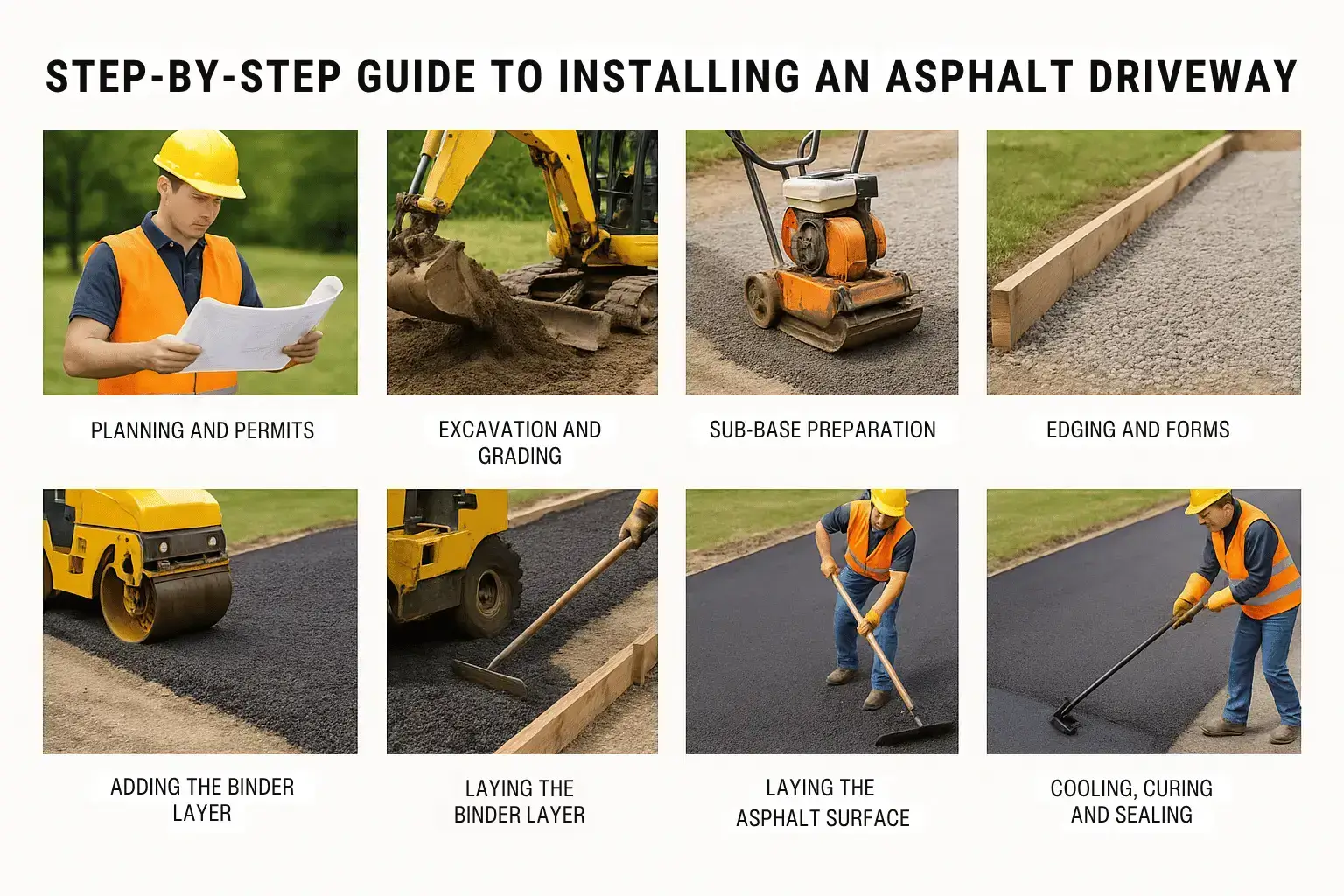
Putting in an asphalt driveway might look easy, but a lot is going on behind the scenes. Each step helps make sure your driveway stays strong, smooth, and lasts for many years. Here’s how it’s done, in simple terms:
- Planning and Permits
Before anything gets built, you need a plan. Think about how long and wide you want your driveway to be. You also have to check with your city or town to make sure you’re allowed to build it. Sometimes, you’ll need a permit or have to follow special rules. Getting this part right makes sure you don’t have problems later. - Excavation and Grading
Now it’s time to clear the space. Workers remove grass, dirt, or an old driveway. They also shape the ground a bit so rainwater flows away from your house. This helps stop water from causing cracks or damage later. - Sub-Base Preparation
After clearing the ground, workers add a thick layer of crushed rock or gravel. This is called the sub-base. It helps make the driveway strong and helps water drain properly. Big machines press the rocks down to keep them in place and stop the driveway from sinking or shifting. - Edging and Forms (Optional)
Sometimes, edges are added before the asphalt. These are made of wood or metal and help keep the shape of the driveway neat. They also keep the hot asphalt from spreading out too far. - Adding the Binder Layer
Next, a strong layer of big stones and sticky black stuff (called bitumen) is put down. This binder layer adds extra strength so the driveway can hold heavy cars or trucks. - Laying the Asphalt Surface
Now, the top layer of asphalt is added. This layer is smoother and gives the driveway its nice, finished look. It’s poured while still hot and spread out evenly using a paving machine. - Compacting the Asphalt
While the asphalt is still warm, big rollers go over it several times. This makes it flat and squeezes out any air bubbles. This step is super important to make sure your driveway doesn’t fall apart too soon. - Cooling, Curing, and Sealing
After it’s rolled out, the driveway needs to cool and harden. You can usually walk on it after one day, but it’s better to wait two or three days before driving on it. Over time, it becomes even stronger. Later, sealing the surface helps protect it from the sun, rain, and wear.
Common Mistakes to Avoid During Asphalt Driveway Installation
Getting a new asphalt driveway is exciting, but if it’s not done the right way, problems can show up later. Things like cracks, bumps, or sinking may not appear right away, but they can show up after a few months or a year. That’s why it’s important to know what mistakes to avoid when installing a driveway. Here’s a simple, easy-to-understand list of common issues and how to stop them from happening:
- Not Preparing the Ground Properly
This is one of the biggest reasons driveways don’t last. If workers don’t remove the old ground or grass well, or don’t flatten and press the soil firmly, the driveway might sink or crack. The ground underneath needs to be strong and solid. - Weak or Thin Base Layer
The gravel or crushed rock layer under the asphalt is super important. If it’s too thin, made from bad materials, or not packed down tight, it can’t support the asphalt on top. That makes the driveway wear out much faster. - Pouring Asphalt on Wet or Cold Ground
Asphalt should only be poured on dry, warm ground. If the soil is muddy, wet, or frozen, water gets stuck underneath, and the whole thing becomes weak. Also, in cold weather, asphalt cools too fast, and that makes it hard to press down properly. - Not Pressing the Asphalt Enough
After the asphalt is laid, it needs to be rolled over with heavy machines while it’s still hot. If this step is skipped or done too late, air gets trapped, and the surface won’t be strong. Pressing the asphalt helps make it tight and solid. - Making the Asphalt Too Thin
Using a thinner layer of asphalt might save money at first, but it wears out quickly. If it’s less than 2 inches thick after being pressed, it can crack and form potholes sooner. - Ignoring the Edges
The sides of the driveway get a lot of pressure from cars and shifting soil. If the edges aren’t packed well or supported, they start to break apart. Clean, firm edges help keep the whole driveway in place. - Using the Wrong Type of Asphalt
Not all asphalt is the same. Different weather and traffic needs require different mixes. If the wrong type is used, the driveway can crack, fade, or fall apart faster. It’s always better to choose the right mix for your area.
Why This Is Important?
Even though these mistakes might not seem like a big deal at first, they cause big problems later. Fixing a broken driveway costs more than doing it right the first time.
Why Choose Texpave Experts for Asphalt Driveways in Texas?
Getting a new asphalt driveway is a big deal, and choosing the right company really matters. You want your driveway to be strong, smooth, and last a long time, not start cracking after just one year. That’s where Texpave Experts come in. They’ve been doing this work for a long time and know how to do it right. Here’s why they’re a smart pick if you live in Texas:
- Over 35 Years of Experience
Texpave Experts have been fixing and building driveways for more than 35 years. They’ve worked on small driveways for homes and big parking lots for businesses. That experience helps them understand the Texas weather and soil, so they know how to build something that lasts. - They Don’t Take Shortcuts
Texpave always follows the proper steps. They dig deep, lay a thick layer of gravel, and pack it down tight before adding the asphalt. This helps stop cracks, sinking, and other problems later. They do it right the first time. - High-Quality Materials and Tools
To build a great driveway, you need strong materials and the right tools. Texpave uses top-grade asphalt from trusted local sources and modern equipment to make sure everything is smooth and tough. Their tools help them build driveways that hold up through heavy traffic and tough Texas weather. - Easy to Work With
Customers like working with Texpave because they explain things clearly and are easy to talk to. From your first phone call, they’ll let you know what to expect, give you a clear price, and keep you updated during the whole job. Their team is friendly, shows up on time, and cleans up when they’re done. - They Serve Your Town
Texpave works in Rockwall, Quinlan, Terrell, Greenville, and all over the DFW area. Since they’re local, they understand what works best for your location. - Eco-Friendly Choices
If you care about the environment, Texpave offers recycled asphalt options. This helps reduce waste while still giving you a driveway that looks great and lasts a long time. - They Back Up Their Work
Texpave offers solid warranties on their work and will also give you advice on how to take care of your driveway, like when to seal it or how to fix small cracks. They want your driveway to stay in good shape for many years.
The Basics of Asphalt Density
Why Does It Matter?
1. Durability and Longevity
The most compelling reason to focus on asphalt density is durability. Dense asphalt can withstand the rigors of heavy traffic and environmental stressors like water, heat, and cold. A well-compacted asphalt surface is less prone to cracking, pothole formation, and other types of wear and tear.
2. Resistance to Water Damage
Water is asphalt’s enemy. Dense asphalt with minimal air voids provides less space for water to penetrate. This resistance to water ingress prevents damage like cracking and rutting, which are exacerbated by freeze-thaw cycles in colder climates.
3. Improved Ride Quality
A dense, smooth asphalt surface enhances ride quality. Drivers experience fewer bumps and potholes, leading to a more comfortable and safer driving experience. Moreover, it reduces vehicle wear and tear, benefiting both drivers and their vehicles in the long run.
4. Cost-Effective Maintenance
Denser asphalt requires less maintenance over its lifespan. With fewer repairs needed, the long-term costs associated with road upkeep decrease. This cost-effectiveness is a significant advantage for municipal budgets.
5. Environmental Impact
Dense asphalt has environmental benefits too. It lasts longer, reducing the need for frequent resurfacing and the associated environmental impact of construction. Moreover, a well-laid asphalt pavement can be recycled, further enhancing its environmental friendliness.
Achieving Optimal Density
Achieving the right asphalt density involves a combination of proper material selection, mix design, and construction techniques. The use of modern paving equipment and adherence to best practices in road construction play a pivotal role.
1. Material Selection and Mix Design
The choice of asphalt mix and aggregate size affects the final density. A well-designed mix ensures that the asphalt is workable yet capable of achieving high density.
2. Compaction Techniques
Compaction is critical in achieving desired asphalt density. Using the right rollers and compaction methods ensures that the asphalt mix is compacted uniformly, eliminating air voids without overcompacting.
3. Quality Control
Regular testing during the paving process ensures that the asphalt achieves the target density. This testing includes on-site inspections and laboratory analysis of asphalt samples.
Conclusion
In conclusion, asphalt density is not just a technical specification; it’s a cornerstone of quality road construction. By prioritizing asphalt density, we can ensure durable, long-lasting, and cost-effective pavements. The roads we travel on every day are only as good as the materials and methods used to build them, and understanding the importance of asphalt density is crucial in building roads that stand the test of time.
The Essential Role of Asphalt Crack Filler Before Winter
As winter approaches, homeowners and property managers often turn their attention to winterizing their properties. One crucial aspect that often goes overlooked is the maintenance of asphalt surfaces. Whether it’s a driveway, parking lot, or walkway, preparing these surfaces for the harsh winter months is vital, and this is where asphalt crack filler comes into play.
Understanding Asphalt Damage
Asphalt is a durable material, but it’s not impervious to the elements. Over time, exposure to water, chemicals, and temperature fluctuations can cause cracks to develop. These cracks might seem minor at first, but they can quickly grow into larger problems, especially in winter.
The Freeze-Thaw Cycle
The primary reason to address asphalt cracks before winter is the freeze-thaw cycle. When water seeps into cracks and then freezes, it expands, widening the cracks. As temperatures fluctuate, this cycle repeats, exacerbating the damage and potentially leading to more significant issues like potholes or substrate erosion.
Benefits of Asphalt Crack Filler
- Prevents Water Penetration: By filling cracks, you prevent water from seeping into the asphalt’s foundation, which can cause severe damage when it freezes and expands.
- Extends Pavement Lifespan: Regular maintenance, including crack filling, can significantly extend the lifespan of your asphalt surfaces, saving you money in the long run.
- Improves Safety: Large cracks and potholes can be hazardous. Filling cracks before they develop into bigger problems helps keep the surface safe for vehicles and pedestrians.
- Enhances Appearance: A well-maintained asphalt surface looks better and can improve the overall aesthetic of your property.
Choosing the Right Crack Filler
Not all crack fillers are created equal. For colder climates, it’s crucial to choose a filler that’s designed to withstand freezing temperatures. Look for products that offer flexibility and can expand and contract with the asphalt.
Timing and Application
The best time to apply crack filler is in the fall, before temperatures drop too low. Clean the cracks thoroughly before application to ensure the filler adheres properly. For larger cracks, it might be necessary to use a patching compound before applying the crack filler.
Professional Help
While smaller cracks can be a DIY project, larger issues should be handled by professionals. They have the right equipment and expertise to ensure the job is done correctly.
Conclusion
In conclusion, addressing asphalt maintenance before winter is an essential step in property upkeep. Asphalt crack filler plays a crucial role in this process, helping to prevent further damage caused by the freeze-thaw cycle. By taking action before the cold weather sets in, you can save on costly repairs, extend the life of your asphalt surfaces, and maintain a safe and appealing property.